
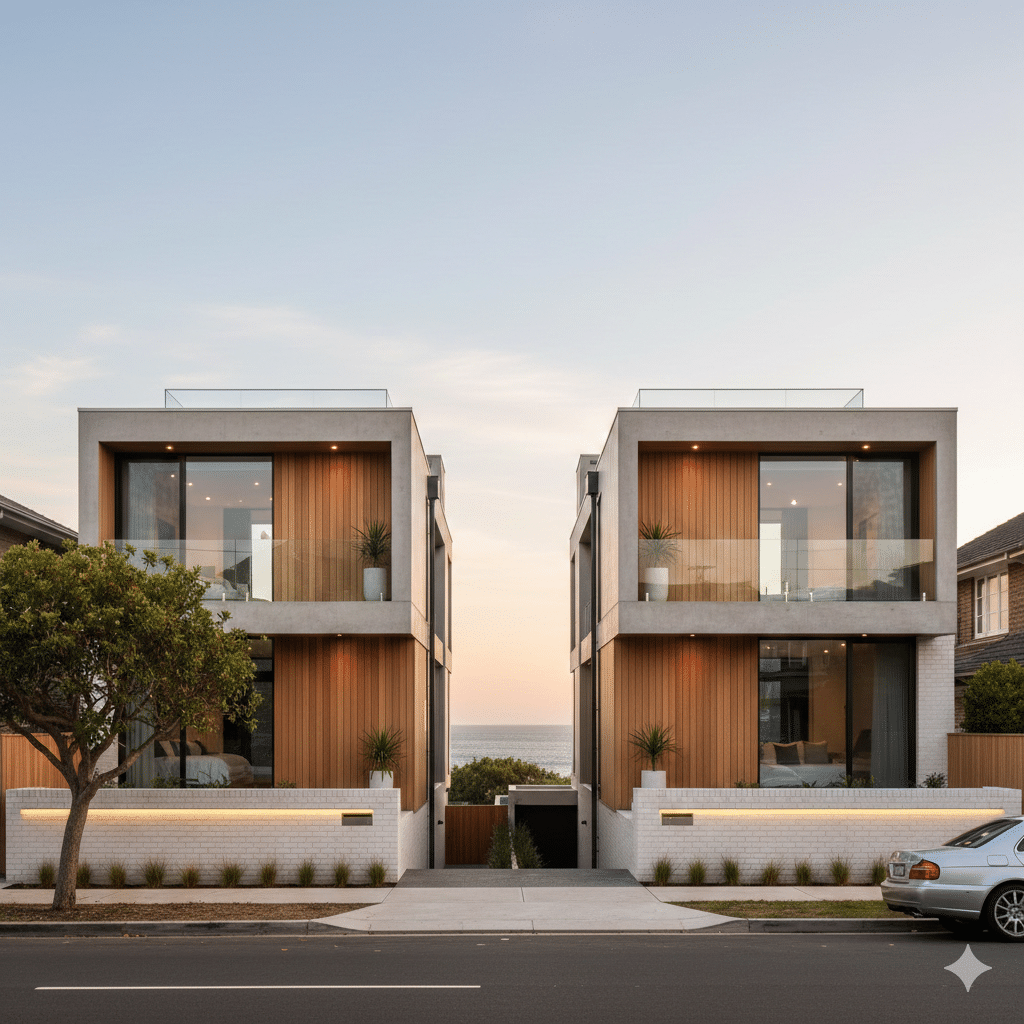
Building a duplex in Sydney’s Eastern Suburbs offers incredible potential, from maximising land value to creating two high-performance homes. But with strict council requirements, tricky block shapes and high expectations from buyers, even small planning errors can snowball into major setbacks. Here are the most common duplex layout mistakes — and how to avoid them.
Overlooking Zoning, Council Rules & Block Suitability
Before you decide on a duplex layout, it’s essential to understand how zoning, setbacks and site constraints shape what you’re legally allowed to build. Many projects stall because this step is rushed or ignored.
- Assuming all blocks qualify: Not every R2 or R3 zone allows duplexes, and each council uses different development controls.
- Ignoring block shape or slope: Uneven or narrow land can restrict your usable footprint and demand pricier engineering.
- Missing easements or heritage overlays: These can dramatically affect building placement or reduce your total build area.
- Underestimating approval timelines: DA/CDC processes often take longer in the Eastern Suburbs due to high-density and environmental considerations.
If you need clarity on zoning, minimum lot sizes or dual-occupancy rules, the NSW Planning and Environment guidelines provide an up-to-date overview of regulations for homeowners and builders. Understanding these constraints early keeps your design compliant and prevents costly layout changes.
Poor Block & Site Selection (Wrong Fit for Duplex Living)
Even if zoning is right, the block itself must support a practical duplex layout. Choosing the wrong site can lead to compromised design, reduced privacy and low resale value.
- Poor sunlight orientation: Living spaces that don’t capture natural light feel dark and disconnected.
- Minimal private outdoor areas: Essential for families and long-term buyers.
- Shared-wall noise issues: Bedrooms backing onto living spaces cause daily frustration.
- Overlooking parking access: In the Eastern Suburbs, parking is gold — poor planning reduces appeal.
Smart block selection sets the foundation for a layout that feels functional and comfortable.
Using Generic Layout/Structural Templates Without Site-Specific Engineering
Every Eastern Suburbs block is unique — and your duplex layout must respond to those site conditions. Using generic templates often leads to structural issues, expensive variations or inefficient layouts.
- Ignoring soil & slope: Impacts everything from slab design to drainage requirements.
- Incorrect load-bearing design: Over-engineering wastes money; under-engineering creates risk.
- Poor stormwater planning: A top failure point in duplex compliance checks.
- Crammed services placement: Fire separation, plumbing, and access must be designed early.
Tailoring your design early ensures your project is structurally sound and cost-efficient. Many homeowners rely on duplex construction specialists in Sydney to ensure their layout aligns perfectly with block conditions and council requirements.
Ignoring Long-Term Liveability, Privacy & Resale Value
Your duplex layout must suit real-life living — not just look good on the plans. Some builders prioritise aesthetics over functionality, which leads to layout regrets later.
- Overspending on finishes instead of layout quality: Style cannot fix a poor design.
- Weak acoustic separation: A common cause of owner and tenant complaints.
- Poor natural light or ventilation: Reduces comfort and increases energy bills.
- Ignoring buyer expectations: Eastern Suburbs demand smart zoning, privacy and usable outdoor space.
A layout built around liveability delivers better long-term satisfaction and financial return.
Underestimating Budget, Hidden Costs & Timelines
A duplex is effectively two homes — so budgeting and scheduling must reflect that complexity. Miscalculations in this area cause stress, rushed decisions and layout compromises.
- Under-budgeting excavation and site costs: Especially common on sloped or rocky blocks.
- Skipping contingency: Variations are normal and should be planned for.
- Choosing a general builder instead of a duplex specialist leads to sequencing, compliance or layout issues.
- Expecting short build times: Duplex projects require more services, coordination and sign-offs.
Budgeting realistically protects the quality of your design and avoids unnecessary compromises.
How to Avoid These Duplex Layout Mistakes?
Preventing duplex layout issues doesn’t need to be complicated — it comes down to early planning, realistic expectations and using the right expertise.
- Start with a full feasibility check: Know your zoning, constraints and approval pathways.
- Use a site-responsive design: Let slope, sun and soil inform your layout decisions.
- Prioritise comfort and privacy: Sunlight, acoustics and orientation matter.
- Budget for hidden conditions: Excavation, retaining walls and engineering are rarely “standard.”
- Work with specialists: Duplex-experienced builders and designers reduce risk instantly.
- Plan for long-term value: Modern families expect flexibility, storage and functional living zones.
For homeowners refining layouts or upgrading during construction, modern home renovation experts can help optimise spaces for long-term comfort and everyday functionality. These steps ensure your duplex build stays on track — structurally, financially and practically.
H2: Final Thoughts — Getting Your Duplex Build Right
Avoiding these layout mistakes ensures your duplex is designed for comfort, compliance and long-term value. With the right planning, the right team and a design tailored to your site, you’ll end up with a duplex that performs beautifully for everyday living — and stands strong in Sydney’s competitive Eastern Suburbs market.