
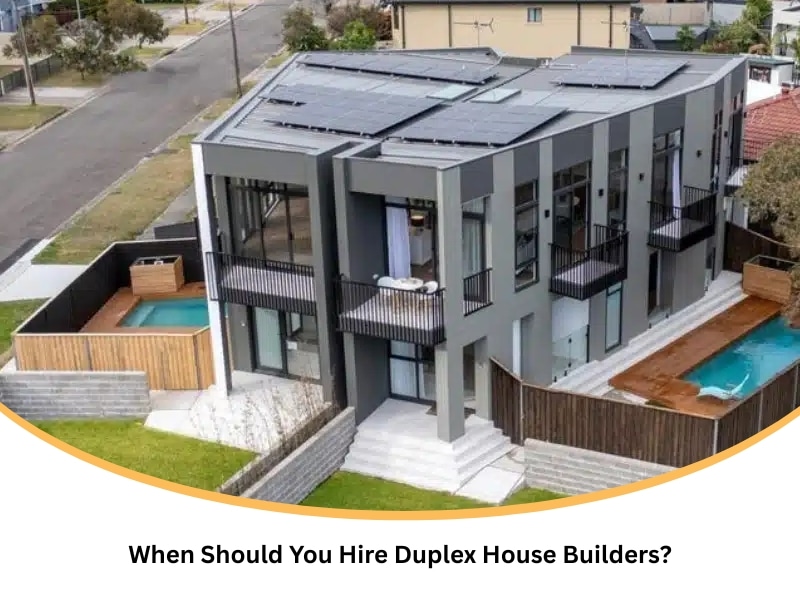
Building a duplex isn’t a walk in the park—so when’s the right time to get the pros involved? That question nags many property owners, especially as timelines, approvals, and costs begin to pile up. Jumping in too early can waste money, too late and you’re playing catch-up. Hiring experienced duplex house builders at the right stage helps avoid project spirals and provides clarity from day one. From design complications to delays, the risks are real—but so are the solutions. This article shows you exactly when to bring in builders and how to dodge avoidable dramas before they snowball.
What problems can arise with duplex house builders?
Every builder promises smooth delivery, but the wrong match can drag a project through the mud.
- Misaligned expectations: A lack of detail in contracts often leads to disputes, particularly regarding finishes and fixtures. Poorly defined scopes usually mean owners assume inclusions that aren’t provided.
- Communication breakdowns: Delayed updates trigger rework, slow progress, and coordination issues across trades. Without centralised tracking, even minor misunderstandings can derail entire stages.
- Poor quality control: Skipping inspections or checks can cause faults in structural framing, roofing, or electrical systems. These often aren’t found until late, when corrections are costly.
- Unclear roles: When project management is weak, tradies clash, and timelines shift unpredictably. Site supervisors must actively coordinate every aspect, not just show up occasionally.
These issues don’t just delay things—they erode trust. It’s crucial to engage efficient duplex house builders for custom projects once design plans are locked, but before construction approval. That’s when their systems and experience prevent early missteps.
How do budget issues spiral during a duplex build?
Budget surprises can quickly derail your duplex build. Here are the most common financial pitfalls—and how the right builder can help prevent them:
- Inaccurate site assessments: Soil instability or unexpected drainage issues can lead to significant, unforeseen expenses. Getting proper geotechnical reports upfront can prevent this.
- Inflation on materials: Price spikes on timber, steel, or cladding strain your original financial buffer. Builders with strong supplier ties can often maintain pricing for more extended periods.
- Design changes mid-stream: Altering layouts or finishes late adds both labour and material costs. It also disrupts schedules, affecting the availability of other trades.
- Scope creep from trades: When contractors tack on extras without tracking, final costs snowball. Builders must maintain live cost logs to alert you early.
Tight budgeting needs sharp oversight and flexibility. Builders who specialise in planning your duplex build timeline often pair scheduling with financial tracking tools—helping you stay within budget and ahead of cost traps.
What qualities matter most in duplex house builders?
Choosing the right builder isn’t just about experience—it’s about how they operate day to day.
| Essential Trait | What It Ensures |
| Defined build process | Minimises confusion during each phase of construction |
| Hands-on project supervision | Ensures real-time issue resolution onsite |
| Fixed-scope costing | Protects against post-contract financial surprises |
| Internal trade teams | Delivers faster turnaround and consistent quality |
| Knowledge of local standards | Speeds approvals and avoids compliance rejections |
These qualities reflect reliability and clarity. When interviewing potential teams, review their process, not just past builds. That structure makes the most significant difference once the tools hit the ground.
How do skilled builders improve a duplex project?
Good builders don’t just follow a plan—they refine it as they go.
- Design validation checks: Catching layout issues early avoids awkward room sizes or clumsy transitions. Adjustments on paper are far cheaper than onsite.
- Compliance-forward mindset: Integrating codes into every drawing helps dodge last-minute rework. Builders who double-check each compliance layer avoid time-sapping corrections.
- Daily build logs: Keeping track of progress improves communication and keeps you informed. They also serve as valuable records in the event of disputes.
- Finishing detail discipline: Tight supervision over tiles, joints, paint lines, and cabinetry pays off in the long term. These small details often define resale value.
Builders who operate in this manner ensure that the end product meets expectations and achieves resale goals. That’s especially critical when exploring innovative double-storey house layouts, where detail defines liveability.
Why do some duplex projects face frustrating delays?
Delays can start small but quickly cascade into long hold-ups.
- Slow permit processing: Minor paperwork gaps cause weeks-long hold-ups at the council. Builders familiar with local planners can often fast-track minor amendments.
- Uncoordinated trades: Electricians and plumbers arrive out of sync, resulting in delays and hindering progress. Sequencing subcontractors effectively prevents overlapping and lost days.
- Weather exposure: Incomplete roofing or slab work leaves the site vulnerable to rain and wind delays. Covering key stages with temporary protection minimises this.
- Late material deliveries: Supply chain hiccups, especially with imported finishes, pause internal fit-outs. Builders should pre-order specialty items as soon as contracts are signed.
Delays are more than frustrating—they cost real money. Anticipating these risks early and scheduling trade overlaps tightly can slash downtime by weeks. Builders who front-load prep often eliminate these stumbling blocks.
Which regulations affect duplex construction approvals?
Approvals are where many builds grind to a halt, especially if you don’t prepare early. By understanding NSW planning laws and development myths, you can anticipate potential hurdles and streamline the approval process.
- LEP zoning restrictions: Dictate height limits, parking, open space, and building separation. Builders must tailor each plan to the specific rules of the suburb.
- DCP design criteria: Influences façade appearance, private open space, and overshadowing. These design tweaks are best handled before lodgement.
- State planning rules: Low- and mid-rise policies now override some council controls in Sydney suburbs. This can speed up builds, but only if your team knows how to leverage the changes.
- Environmental overlays, such as bushfire zones, flood-prone areas, or heritage overlays, can complicate approvals. Builders familiar with these designations reduce the risk of late rejections.
Builders well-versed in local codes save time by designing within regulatory constraints. The faster you align your plans with these policies—like those found when you understand NSW low‑ and mid‑rise housing policy—the faster shovels hit the soil.
Final thought
Hiring the right duplex builder isn’t a luxury—it’s essential. The earlier you bring them into the fold, the less you’ll battle issues like cost blowouts, planning confusion, or workmanship lapses. Once your concept design is finalised and you’re eyeing approvals, that’s the moment to act. For tailored guidance on delivering custom duplex homes that tick all the boxes, see what Sydney East Building & Renovations offers for custom homes.